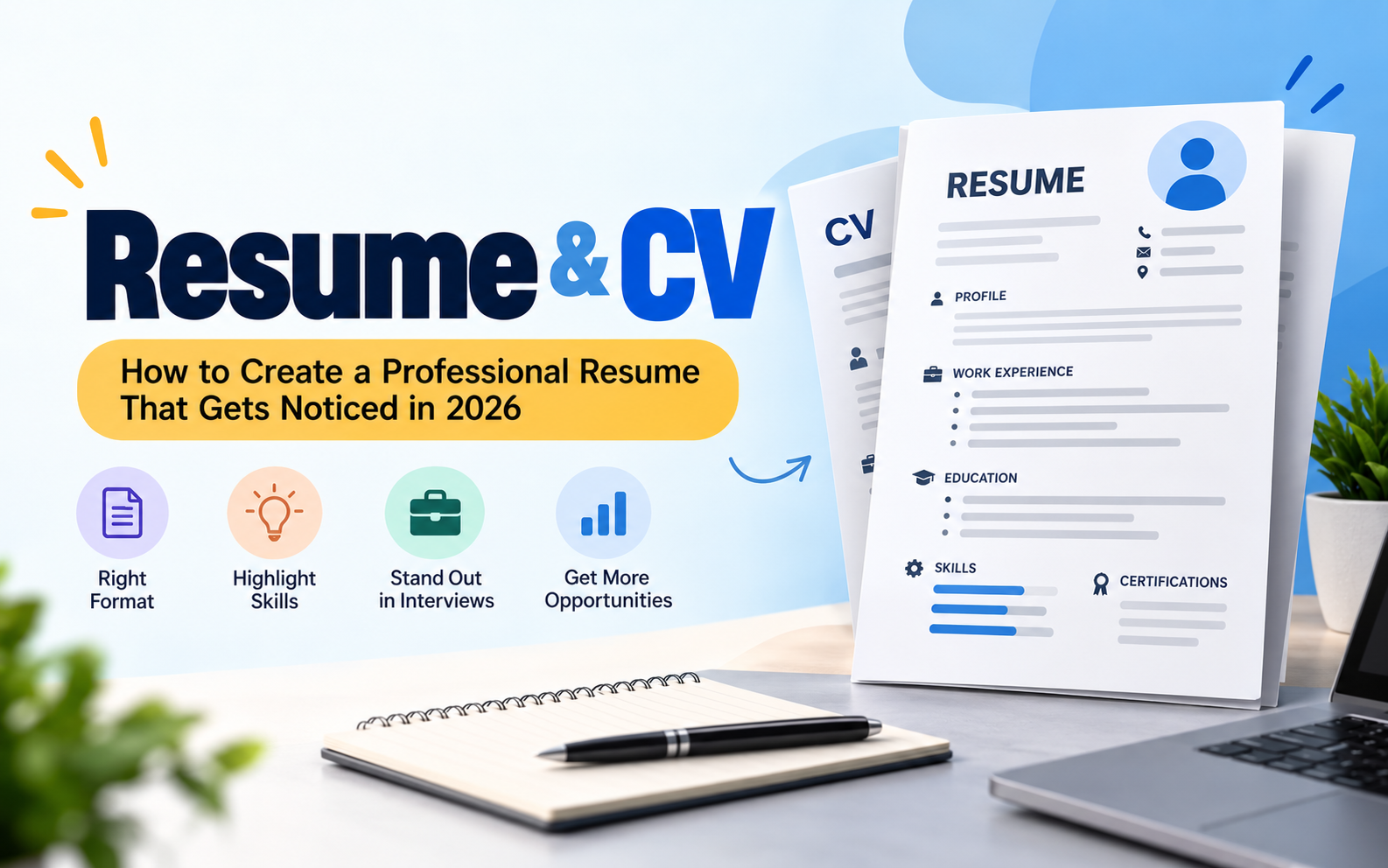
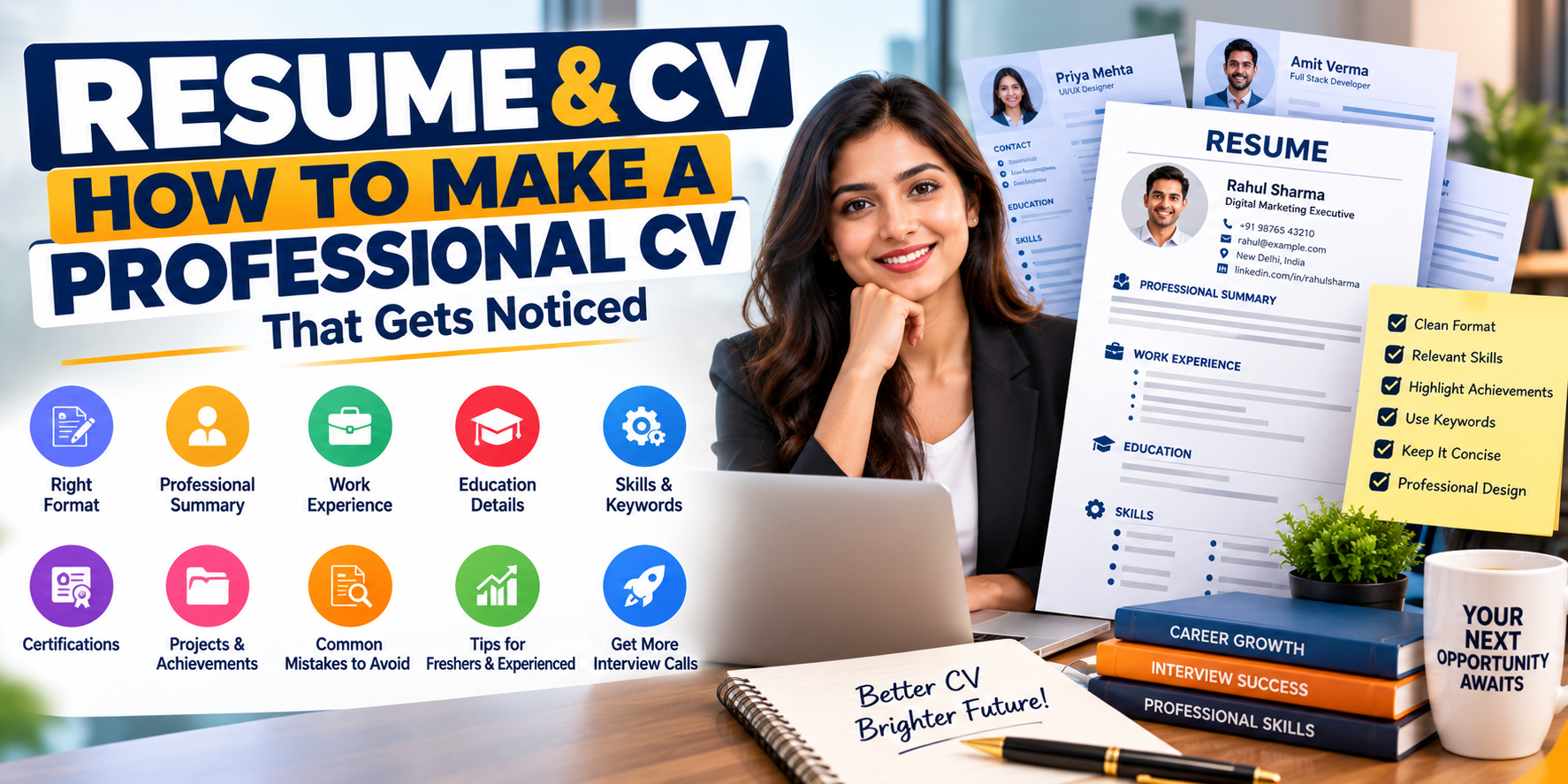
Resume & CV: How to Create a Professional Profile That Gets Noticed
Your experience tells your story. Learn how to present your qualifications, skills, and achievements in a way that helps employers understand what you can bring to their team.
Introduction: Your Resume Speaks Before You Do
Imagine applying for your dream job. You have the right education, the motivation to learn, and the skills required for the position. Yet, when an employer opens your application, they see a confusing document filled with unnecessary details. Your actual strengths become difficult to identify.
This is why your resume deserves careful attention. It gives recruiters an initial picture of your background, experience, and suitability for a role. A well-organised resume makes relevant information easier to find and helps employers decide whether to invite you for an interview.
Whether you are a student applying for your first internship, a fresher looking for employment, or an experienced professional planning a career change, the way you present your profile matters.
1. Resume vs CV: What Is the Difference?
The terms resume and CV are often used interchangeably, particularly in India, but they can mean different things depending on the country and industry.
What is a resume?
A resume is generally a concise document tailored to a particular job. It highlights relevant experience, skills, education, and achievements. For many corporate and private sector roles, a one or two-page resume is a practical choice, although the appropriate length depends on the applicant and position.
What is a CV?
A curriculum vitae, or CV, can be a more detailed record of academic and professional history. In academic and research settings, it may include publications, research projects, teaching experience, presentations, and awards.
In some countries, including India, employers may use the term CV for a standard job application document. Always follow the employer's instructions and local conventions.
2. Start With a Clear Professional Summary
A professional summary introduces your background and the value you can offer. Keep it relevant to the position instead of using generic statements that could describe anyone.
Example for a fresher
Recent commerce graduate with foundational knowledge of accounting, spreadsheets, and financial reporting. Interested in an entry-level accounting role where I can apply my analytical skills and develop practical industry experience.
Example for a digital marketing professional
Digital marketing professional with experience in content planning, social media campaigns, and performance tracking. Skilled in developing campaign ideas, analysing results, and supporting marketing objectives.
Use these examples as a starting point and adapt them to your real qualifications. Avoid claiming experience or expertise you cannot demonstrate.
3. Highlight Skills That Match the Job
Recruiters want to understand whether you have the skills required for the role. Read the job description carefully and identify the abilities the employer values most.
These may include technical skills such as Excel, programming, accounting software, graphic design, or data analysis. They may also include communication, teamwork, customer service, research, and problem-solving.
Include relevant skills that you genuinely possess. Where possible, show how you used them in an internship, project, volunteer activity, or previous job.
4. Describe Achievements, Not Just Responsibilities
A list of duties tells an employer what you were assigned to do. An achievement explains what you contributed or accomplished.
Basic description
Responsible for managing social media accounts.
More informative description
Planned weekly social media content, coordinated creative assets, and tracked engagement to improve campaign planning.
If you have reliable figures, include them where they add useful context. For example, you might mention the number of projects completed, the size of a team supported, or a measurable improvement you helped achieve.
Never invent numbers or exaggerate your contribution. A specific, honest description is more useful than an impressive claim you cannot explain in an interview.
5. How Freshers Can Create a Strong Resume
Lack of formal work experience does not mean you have nothing worth presenting. Employers may also value academic projects, internships, relevant coursework, certifications, volunteer work, and personal projects.
For example, a computer science student could describe a website they built, the technologies used, and the problem the project was intended to solve. A business graduate might explain a market research assignment or a financial analysis project.
Include your education, relevant skills, projects, certifications, and any genuine experience that supports your application. Keep the information easy to scan.
6. Choose a Clean, Professional Format
An effective resume should be readable on a computer screen and easy to print. A simple layout often works better than a design crowded with graphics, decorative fonts, and multiple columns.
- Use clear section headings and consistent formatting.
- Choose a readable font and comfortable text size.
- Keep dates, job titles, and organisation names consistent.
- Use bullet points for responsibilities and achievements.
- Check spelling, grammar, spacing, and page breaks.
- Save the document in the format requested by the employer.
Many employers use applicant tracking systems (ATS) to organise applications. A straightforward layout, standard section headings, and relevant wording can make information easier for such systems to process. No particular format guarantees that a resume will pass every ATS.
7. Common Resume Mistakes to Avoid
Adjust your summary, skills, and relevant experience to match each position.
Include contact information needed for recruitment. Avoid sharing sensitive information such as passwords, bank details, or identity document numbers.
Break information into short sections and bullet points so recruiters can locate relevant details quickly.
Be accurate about qualifications, employment dates, skills, certifications, and achievements.
Small errors can distract from your qualifications. Review the final document before submitting it.
8. Keep Your Resume Updated
Your resume should change as your experience grows. Whenever you complete a meaningful project, learn a relevant skill, earn a qualification, or take on a new responsibility, consider adding it to your master copy.
Maintain one complete version containing your career history and create tailored copies for individual applications. Use clear filenames, such as FirstName_LastName_Marketing_Resume.pdf, when PDF submission is appropriate.
Before sending an application, check the recipient, requested document format, contact details, and any additional requirements in the job listing.
Your Resume Checklist Before Applying
- My contact information is correct.
- My summary matches the type of job I want.
- My skills and achievements are accurate.
- My most relevant experience appears clearly.
- My document is readable and free from obvious errors.
- I have followed the employer's application instructions.
Conclusion: Make Your Experience Easy to Understand
A professional resume or CV is a clear account of what you know, what you have done, and how your background relates to the opportunity you are pursuing.
You do not need an expensive template or complicated design to create a strong application. Focus on relevant information, honest achievements, readable formatting, and careful proofreading.
Update your resume as you grow, tailor it to each suitable opportunity, and use every application as a chance to present your experience more clearly.
Career advice is general in nature. Resume requirements differ by employer, country, profession, and academic field. Follow the instructions provided with each application.

Comments
Leave a Comment