CAREER GUIDE 2026 · FRESHER EDITION
Resume & CV for Freshers: How to Get Noticed Without Work Experience
Your first job may be waiting for you. Make sure your resume tells employers why they should give you a chance.
You have completed your degree, learned new skills, and started applying for jobs. But there is one problem: every second job advertisement seems to ask for experience. How are you supposed to gain experience when nobody gives you your first opportunity?
This is where a strong resume or CV can make a difference. You do not need an impressive job title or years of corporate experience to create a professional application. Your academic projects, internships, practical skills, certifications, freelance work, and willingness to learn can all help demonstrate your potential.
In 2026, job seekers also need to understand applicant tracking systems (ATS), online recruitment portals, digital portfolios, and the responsible use of AI tools. A colourful resume alone will not guarantee an interview. What matters is how clearly you demonstrate that you can do the job.
1. Resume vs CV: Which One Should a Fresher Use?
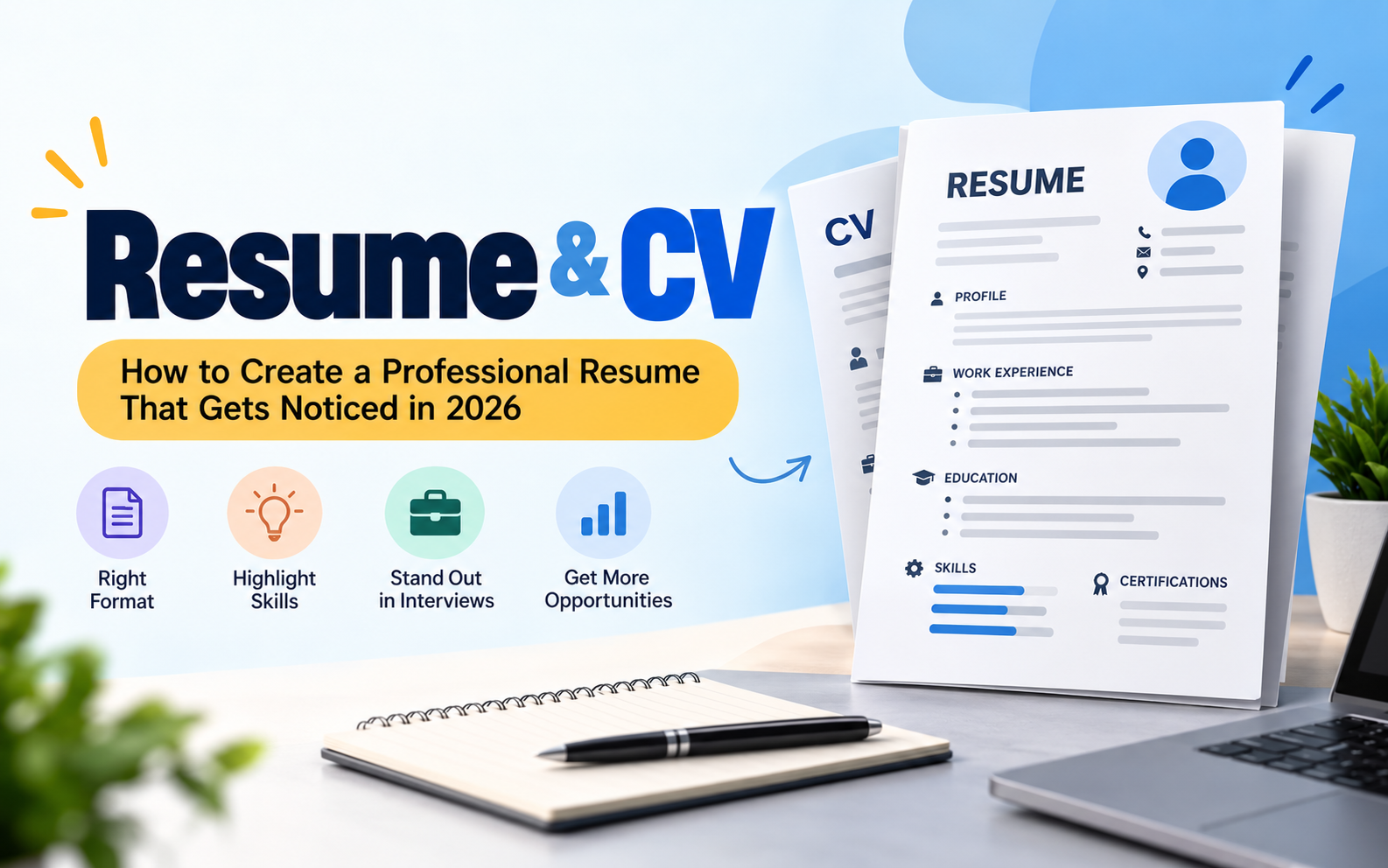
The terms resume and CV are often used interchangeably in India, particularly when applying for private-sector jobs. However, there is a difference in how they are used in some countries and academic settings.
- Resume: A concise document highlighting your education, relevant skills, projects, experience, and achievements for a specific job.
- CV (Curriculum Vitae): A more comprehensive record of academic qualifications, research, publications, teaching experience, and other professional achievements, especially for academic or research positions.
Which should you choose? For most entry-level corporate jobs, internships, sales roles, marketing positions, and IT vacancies in India, a concise, targeted resume is a sensible starting point. For research, academic, or specialised applications, follow the employer's instructions regarding a CV.
2. What Should a Fresher Include in a Resume?
Your resume should make three things clear: who you are, what you can do, and why your skills are relevant to the vacancy.
Essential resume sections
- Contact information: Your full name, professional email address, phone number, city, and relevant LinkedIn or portfolio link.
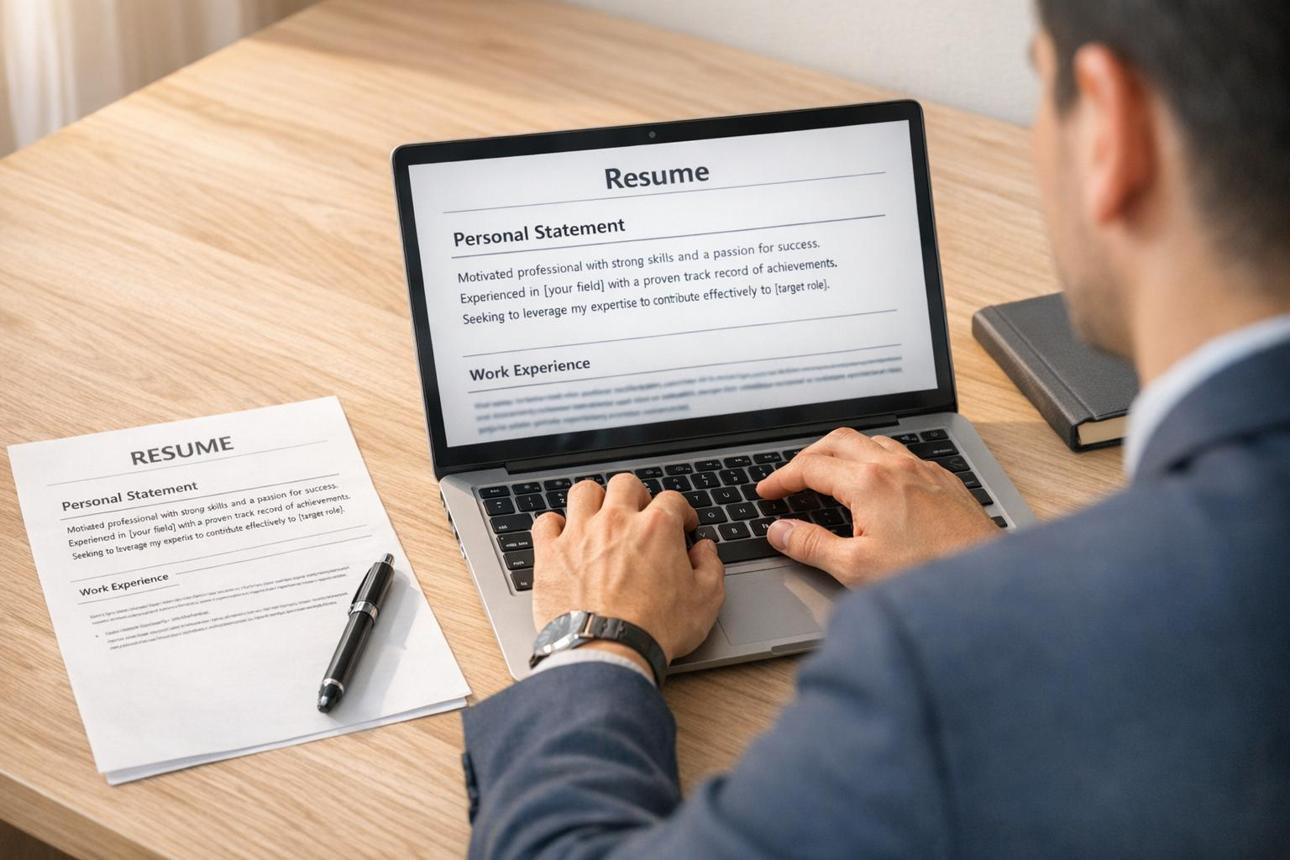
- Career objective or summary: Two or three focused lines explaining your target role and relevant strengths.
- Education: Your degree, institution, graduation year, and relevant marks or CGPA.
- Skills: Job-related technical, software, communication, or other demonstrable skills.
- Projects and internships: Evidence of how you applied your knowledge to practical work.
- Certifications and achievements: Relevant courses, competitions, awards, volunteering, or leadership experience.
Include only the sections that add value. You generally do not need to add your photograph, marital status, religion, or unrelated personal details unless the employer or application process specifically requires them.
3. How to Write a Career Objective That Sounds Professional
One of the most common fresher resume mistakes is using generic statements such as “I am seeking a challenging position in a reputed organisation where I can grow and develop my skills.” The statement is not necessarily wrong, but it does little to distinguish you from other applicants.
A stronger objective identifies the role you want and the skills or experience you can bring.
Example for an IT fresher
Computer science graduate with practical knowledge of Python, SQL, and web development, seeking an entry-level software development role where I can contribute to real-world projects and strengthen my technical skills.
Example for a marketing fresher
Marketing graduate with hands-on experience creating social media content and conducting audience research. Seeking a digital marketing role to support content planning, campaign execution, and performance analysis.
Example for a commerce fresher
B.Com graduate with knowledge of Excel, financial reporting, and basic accounting principles, seeking an entry-level finance or accounts position to apply analytical skills and develop practical industry experience.
Use these examples as starting points, not ready-made claims. Only mention skills you genuinely possess.
4. No Work Experience? Turn Your Projects into Proof
Employers understand that fresh graduates may not have full-time work experience. What they need is evidence of effort, learning, and practical ability.
You can include:
- College projects and final-year assignments.
- Personal websites, applications, or portfolio projects.
- Internships and apprenticeships.
- Freelance work or small projects completed for local businesses.
- College clubs, event management, volunteering, and leadership activities.
- Relevant online courses and certifications.
Instead of merely listing a project title, explain what you did, which tools you used, and what the outcome was.
Weak example: “Made a website for a college project.”
Stronger example: “Built a responsive college event website using HTML, CSS, and JavaScript, featuring an event listing page, registration form, and mobile-friendly navigation.”
The stronger version gives a recruiter something specific to evaluate. If you have verified measurements, such as the number of users who tested the project or the time saved by a process, include them. Never invent statistics to make a project look impressive.
5. ATS-Friendly Resume: Why Formatting Matters in 2026
Many employers use applicant tracking systems to collect applications and help recruiters search or review candidate information. These systems vary, so there is no universal resume format that guarantees selection.
However, a clear and readable document can reduce avoidable parsing problems.
Follow these formatting tips
- Use a simple, single-column layout for applications submitted through recruitment portals.
- Choose a readable font such as Arial, Calibri, or another professional typeface.
- Use familiar section headings such as Education, Skills, Projects, and Experience.
- Keep contact information in the main document body rather than relying on complex headers or footers.
- Avoid decorative graphics, skill-rating bars, and complicated tables that may interfere with text extraction.
- Use relevant keywords from the job description naturally and accurately.
- Submit a text-readable PDF or DOCX file according to the employer's instructions.
Important: An ATS-friendly resume does not mean stuffing the page with keywords. If a vacancy asks for Excel, customer support, or Python, include those terms only when they accurately describe your skills. Support them with examples wherever possible.
6. How to Use AI to Improve Your Resume Without Hurting Your Chances
AI tools can help freshers improve their resumes, especially when they are unsure how to describe a project or tailor an application to a vacancy. But using AI to generate an entire resume without checking the result can create new problems.
Here are five useful ways to use AI responsibly:
- Improve wording: Turn unclear descriptions into concise, professional bullet points without changing the facts.
- Match job requirements: Compare a vacancy with your actual skills and identify relevant experience that you may have overlooked.
- Find missing details: Ask whether your project descriptions explain the problem, your contribution, and the result.
- Check grammar: Correct spelling, sentence structure, and inconsistent formatting.
- Practise interviews: Generate interview questions based on the skills and projects mentioned in your resume.
Never let an AI tool invent an internship, degree, certification, achievement, or technical skill. You should be able to explain every statement on your resume during an interview.
Also, avoid uploading sensitive identity documents, financial information, or confidential employer data to untrusted resume-building platforms.
7. How Long Should a Fresher Resume Be?
For most freshers, one page is a practical target. It encourages you to prioritise relevant information rather than filling space with generic statements.
If you have substantial research, publications, specialist projects, or other relevant achievements, a longer CV may be appropriate for the position.
Do not reduce the font to an unreadable size just to fit everything onto one page. Remove irrelevant details, shorten repetitive sentences, and keep the strongest evidence.
8. Common Resume Mistakes Freshers Should Avoid
- Sending the same resume everywhere: Adjust the document for the particular role and employer.
- Adding skills you cannot demonstrate: Interviewers may ask practical questions about anything you list.
- Using an unprofessional email address: Choose an address based on your name rather than a nickname.
- Including lengthy personal information: Give space to skills, education, and achievements instead.
- Ignoring spelling and grammar: Review the final document carefully before submission.
- Using fake experience: False claims can damage your credibility and jeopardise an offer.
- Forgetting links and contact details: Check that your phone number, email, LinkedIn profile, and portfolio work correctly.
- Using an unclear filename: Save your file with a professional name, such as FirstName_LastName_Resume.pdf.
9. Your 10-Minute Resume Checklist Before Applying
Before you click Apply, review these essentials:
- Does the resume clearly identify the role you want?
- Are your contact details correct?
- Does your education section show accurate qualifications and dates?
- Have you highlighted relevant skills and practical projects?
- Do your keywords match the vacancy where appropriate?
- Can a recruiter understand your strongest qualifications quickly?
- Is the document readable on a phone and computer?
- Have you checked spelling, links, and file format?
- Can you confidently explain every claim in an interview?
10. What Should You Do After Sending Your Resume?
Creating a good resume is only one part of finding a job. Your next steps matter too.
Maintain a simple application tracker with the company name, position, date applied, job link, and follow-up status. This helps you avoid losing track of opportunities and submitting duplicate applications unnecessarily.
Build a small portfolio if your field allows it. Developers can share code repositories or live projects, designers can showcase selected work, and digital marketers can present sample campaigns or content plans. Ensure that the material is genuinely yours and that you have permission to share it.
Prepare for interviews by reviewing the job description and practising explanations of your projects. If you do not hear back, continue applying to suitable opportunities instead of waiting indefinitely for a single employer.
Final Thoughts
Your first resume does not need to look like the profile of someone with ten years of experience. It needs to show that you are prepared, capable of learning, and serious about the role you want.
Focus on a clean format, relevant skills, real project experience, accurate information, and a clear connection to the job description. Use AI as an editing assistant rather than a substitute for your own experience and judgement.
Remember: being a fresher means you are at the beginning of your career, not that you have nothing valuable to offer. Make your skills visible, keep improving your work, and apply with confidence.
Your next opportunity may begin with one well-prepared application.
Comments
Leave a Comment