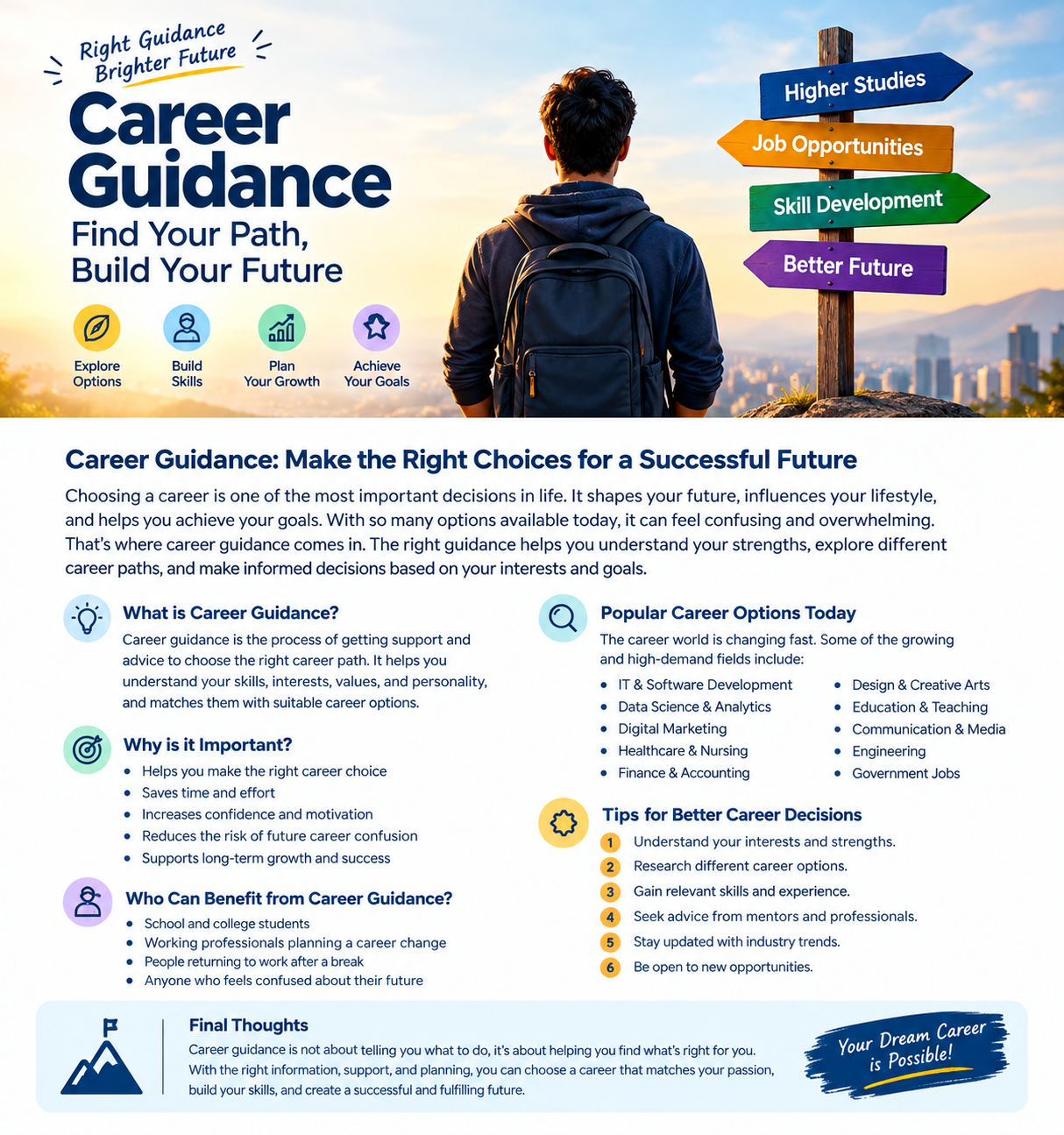
Choosing a career is one of the most important decisions in life. It can influence your lifestyle, financial future, personal satisfaction, and long-term goals. With hundreds of career options available today, students and working professionals can sometimes feel confused about which direction to take.
This is where career guidance can be extremely useful. Proper career guidance helps you understand your interests, strengths, skills, and goals so that you can explore career options that match your abilities and expectations.
What Is Career Guidance?
Career guidance is the process of understanding different career opportunities and making informed decisions about education, skills, jobs, and professional development.
It can help individuals identify their strengths and interests while learning about different industries and job roles. Career guidance is not simply about choosing a job. It is about understanding yourself and exploring opportunities that can support your long-term goals.
Why Is Career Guidance Important?
Making career decisions without sufficient information can sometimes lead to confusion or dissatisfaction. Career guidance provides a structured way to explore different possibilities.
Some important benefits include:
Helps you understand your strengths and interests
Introduces you to different career options
Helps you identify useful skills to develop
Makes education and training decisions easier
Helps you create realistic career goals
Can improve confidence when making career decisions
Encourages long-term career planning
Good career planning should be based on your interests, abilities, goals, and the opportunities available in the field you are considering.
Understand Your Interests and Strengths
The first step in career planning is understanding yourself.
Ask yourself questions such as:
What subjects or activities do I enjoy?
What type of work keeps me interested?
What skills do I already have?
Do I prefer working with people, technology, numbers, ideas, or physical activities?
What kind of working environment would suit me?
What are my long-term personal and professional goals?
Your answers can help you identify career areas that deserve further research.
Explore Different Career Options
Do not limit yourself to careers you already know about. Technology and changing industries have created many new roles.
Depending on your interests and qualifications, you may explore areas such as:
Technology and IT
Software development, cybersecurity, cloud computing, artificial intelligence, data analytics, and IT support are examples of technology-related career paths.
Business and Management
Marketing, finance, human resources, sales, operations, entrepreneurship, and business management offer different professional opportunities.
Healthcare
Healthcare includes a wide range of careers, including medicine, nursing, pharmacy, medical technology, healthcare administration, and allied health professions.
Creative Careers
People with creative interests can explore graphic design, UI/UX design, animation, photography, content creation, advertising, and other creative fields.
Education
Teaching, training, academic research, educational technology, and academic administration are some areas within the education sector.
Skills Matter Along With Qualifications
A degree or qualification can be important for many careers, but skills also play a major role in professional development.
Some widely useful skills include:
Communication
Problem-solving
Critical thinking
Digital literacy
Teamwork
Time management
Adaptability
Leadership
Industry-specific technical skills
The skills you need will depend on the career you choose. Research job descriptions and industry requirements to understand which skills are relevant.
Research Before Making a Decision
Before selecting a career path, spend time researching it.
Look at:
Required qualifications
Entry-level job roles
Important skills
Typical work responsibilities
Training and certification requirements
Career progression opportunities
Industry trends
Work environment
Potential challenges
Speaking with professionals who already work in the field can also provide practical insights that may not be available through basic online research.
Create a Career Plan
Once you have identified a potential career direction, create a simple plan.
For example:
1: Identify your interests and strengths.
2: Select a few career areas to explore.
3: Research qualifications and skills required.
4: Choose relevant courses or training.
5: Build practical skills through projects or experience.
6: Create a strong resume and professional profile.
7: Look for internships, entry-level opportunities, or relevant experience.
8:Review your progress regularly and update your plan when necessary.
A career plan does not have to remain unchanged. Your interests and the job market can change, so it is useful to review your goals periodically.
Career Guidance for Students
Students often face career decisions at an early stage when they have limited knowledge of different professions.
Instead of choosing a career only because it is popular, students should explore their own interests, abilities, educational requirements, and future opportunities.
Parents, teachers, mentors, career counselors, and professionals can all provide useful perspectives.
Students can also gain valuable knowledge through internships, workshops, projects, online courses, career events, and conversations with working professionals.
Career Guidance for Working Professionals
Career guidance is not only for students. Working professionals may also need guidance when considering a career change, promotion, specialization, or transition into a new industry.
If you are considering a career change, first identify your transferable skills. For example, communication, project management, sales, customer service, analysis, and leadership skills may be useful across multiple industries.
You can then identify skill gaps and consider courses, certifications, projects, or practical experience that can help you move toward your desired role.
Common Career Planning Mistakes
Avoid making career decisions based only on short-term trends.
Some common mistakes include:
Choosing a career only because others recommend it
Ignoring personal interests and strengths
Not researching the actual job role
Focusing only on salary
Ignoring skill requirements
Avoiding practical experience
Not developing communication and digital skills
Assuming one career decision must last forever
A thoughtful career decision requires research, self-awareness, and realistic planning.
Final Thoughts
Career guidance can help you understand your options and make more informed decisions about your professional future. Whether you are a student choosing your first career path or a professional considering a change, the process starts with understanding yourself and researching your options.
There is no single career path that is right for everyone. Your interests, skills, qualifications, goals, and circumstances all matter.
Take time to explore, learn new skills, gain practical experience, and review your goals. With proper planning and continuous learning, you can build a career path that supports your personal and professional growth.
Comments
Leave a Comment